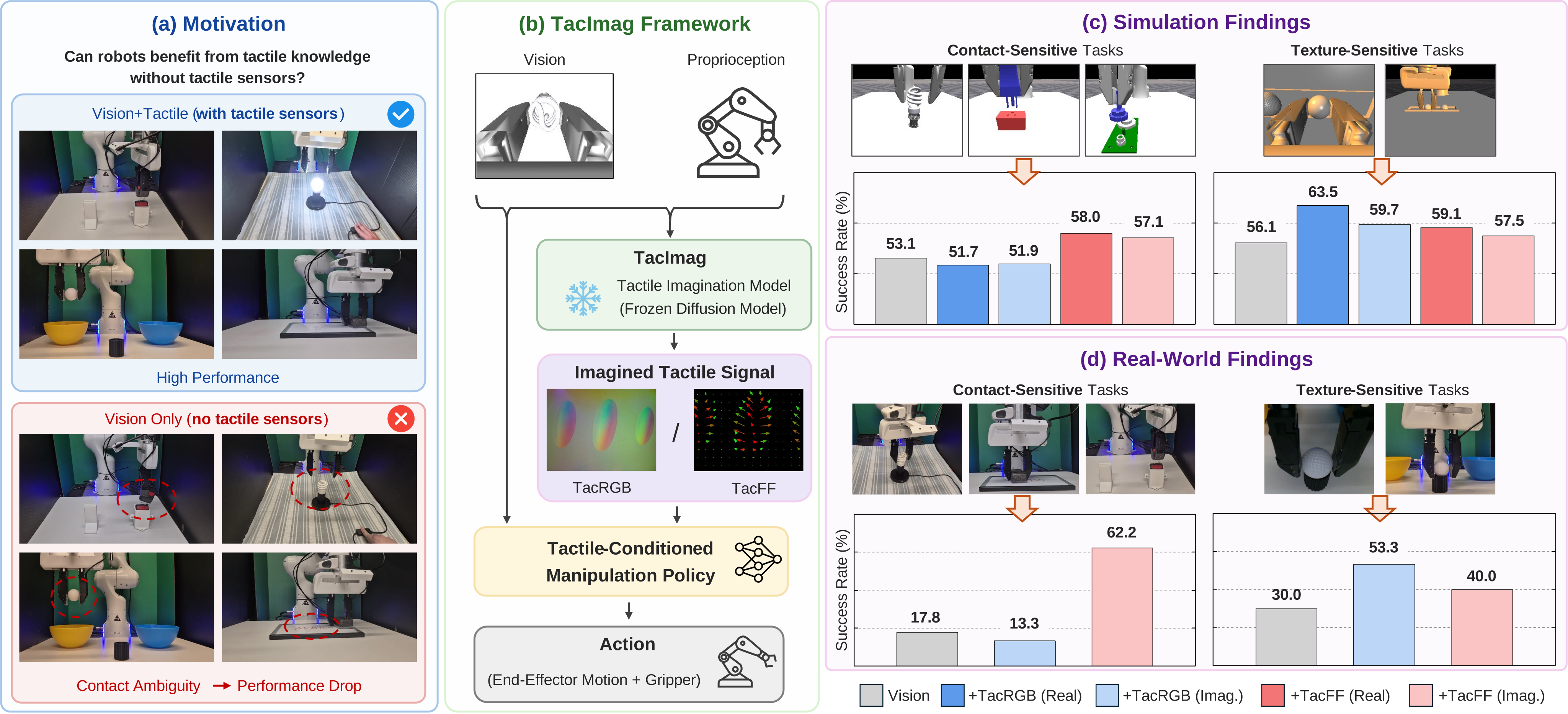
Learning from Touch|Deploying without Tactile Sensors|Vision-to-Tactile Imagination
TacImag predicts task-relevant tactile representations from vision, including TacFF (force-field tactile representation) for contact-sensitive tasks and TacRGB (tactile image representation) for texture-sensitive tasks. These imagined tactile signals enable touch-informed manipulation without physical tactile sensors at deployment.
Simulation Rollouts
TacImag improves contact-sensitive and texture-sensitive manipulation by generating imagined tactile
representations according to the task requirement.
Contact-Sensitive Rollout
Texture-Sensitive Rollout
Method
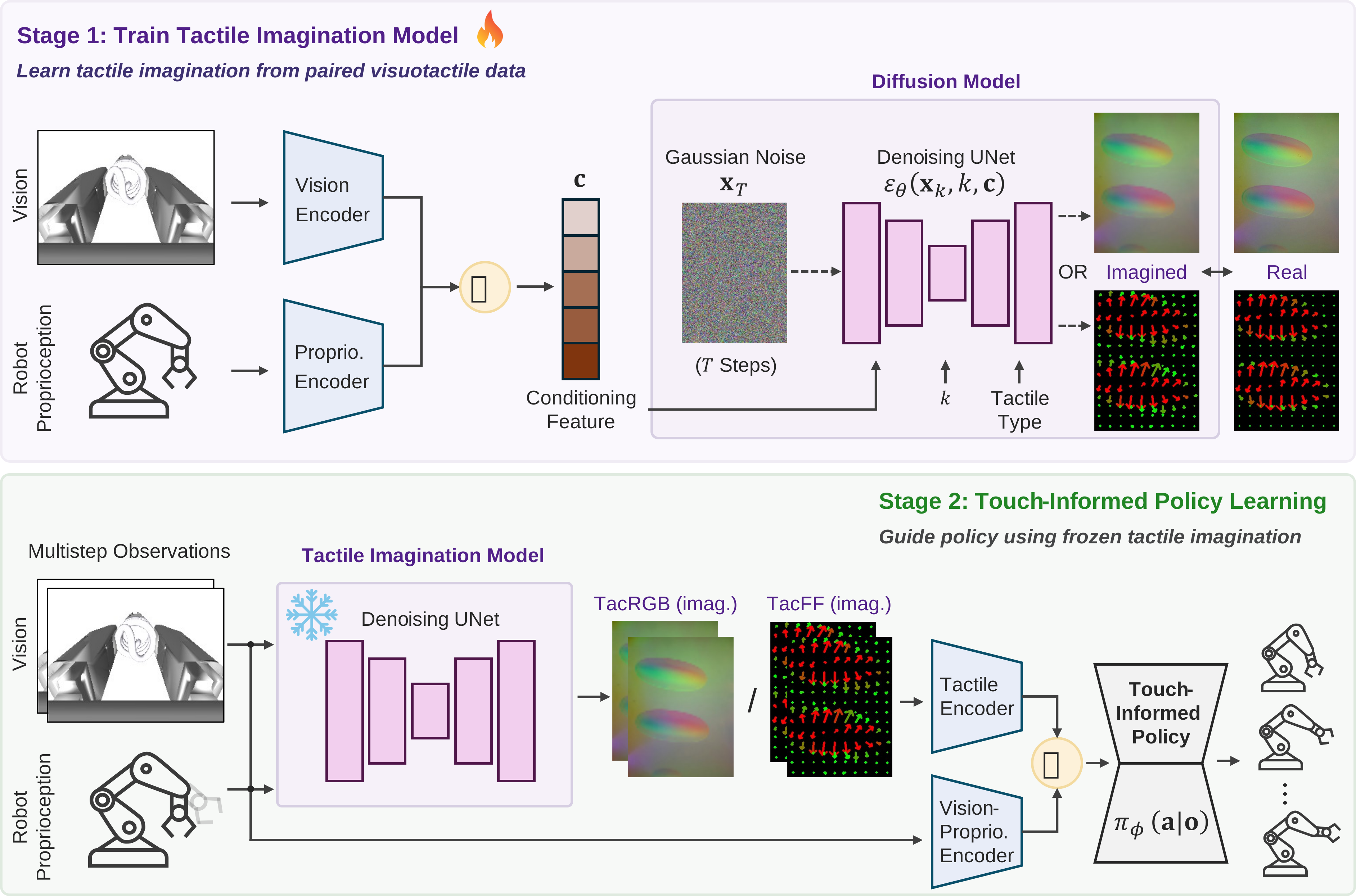
TacImag uses a two-stage pipeline: first, a tactile imagination model learns to generate tactile
observations from visual and proprioceptive inputs; second, a manipulation policy uses the imagined
tactile representations as auxiliary observations during policy execution.
Tactile Imagination Process
The tactile imagination model progressively denoises latent tactile observations and produces
task-relevant tactile representations online.
Real-World Validation
Representative real-world deployments. Click a task button to switch videos.
Whiteboard Wiping
Mechanism: Touch without Tactile Sensors
TacImag does not recover missing physical measurements directly; instead, imagined tactile observations provide contact-aware supervision that transforms subtle visual interaction cues into policy-friendly representations.
BibTeX
@article{zhang2026tacimag,
  title={TacImag: Touch-Informed Manipulation through Imagined Tactile Representations},
  author={Zhang, Zhiyuan and Desai, Adeesh and Hu, Jyun-Chi and Saka, Yosuke and Luu, Quan Khanh and Lei, Jiuzhou and Soleymanzadeh, Davood and Zhang, Bihao and Zheng, Minghui and She, Yu},
  journal={arXiv preprint arXiv:2607.01684},
  year={2026}
}